
THE IMMORTAL SPIRIT OF MAN

By

Shelby G. Floyd


Good morning! I am sure we all had a great Thanksgiving with our family and friends. The songs we have sung today are really great and go perfectly with my lesson. I really like that last song about “the soul that never dies!”

My subject today is the “The Immortal Spirit of Man!” The Bible says that all Scripture is given by inspiration of the Almighty. And the word of God is able to make us perfect unto salvation. That salvation is in Christ Jesus (2 Timothy 3:14-17). And it is in Christ that we find the complete growth and purpose of man.

GOD MADE MAN IN HIS IMAGE


Man has an immortal spirit. And I use the word man in the sense of Adam being the federal head of the human family. That includes man and woman. So we are talking about mankind.

We read in the Bible the question: “What is man that you are mindful of him?” And so we will answer that question in the course of this lesson. Did you know that all of us have an immortal spirit or soul? This soul/spirit came from Almighty God. Soul and spirit are sometimes used interchangeably. But there is also a slight distinction between the soul and the spirit. We will discuss that later.

In order to introduce this lesson, we must go all the way back to Genesis. The Bible says that God created man in his own image. Just think about that. We are made in God’s image. What or who is God? He made us in his image. “So God created man in his own image; in the image of God He created him; male and female He created them” (Genesis 1:27 NKJV). This recounts the origin of man in one verse of Scripture. Man and woman were made in God’s image! Therefore, we were made to honor God.

In Genesis we read “The Lord created man out of the dust of the earth and breathed into his nostrils the breath of life and man became a living being” (Genesis 2:7). This expressed the twofold nature of man. The body was made out of dust. There is not anything made out of dust today that can equal what God made out of the clay! But God did not stop after he had made man out of the earth! “He breathed into his nostrils the breath of life and man became a living being” (Genesis 2:7).

And then God planted man in the garden of Eden. I have always wondered where the garden was located. Many others wonder too! It is identified as being near the river Euphrates. But we are lost in locating the other three rivers.

Anyway, in that garden, God placed the tree of the knowledge of good and evil. Trees are a great blessing. We have all enjoyed the fall scenes of Indiana. Indiana has a forest of oak trees operated on behalf of the USS Constitution and any repairs that ship may need. It is off-limits to everyone else!

Therefore God created a beautiful garden for man and the tree of the knowledge of good and evil was there. And it appears that man did not know the difference between good and evil until he ate of that tree. God commanded him not to eat of it.

Do you remember your innocence growing up as a child? You never committed any sin. And then the first time you committed sin; you did not have a good feeling. Then you thought, “I am now a sinner, because I know the difference between good and evil!” That will give us some idea of how Adam and Eve felt when they realized the difference between good and evil (See Genesis 2:15-17). And God said to them, “you will surely die!” Man did not die physically that day. Man died spiritually because he was separated from God. And after he was separated from God, he hid from Him because he was guilty. Continue reading “THE IMMORTAL SPIRIT OF MAN”

THE BRIDE OF CHRIST

By

Shelby G. Floyd


Good morning church. We thank God for a beautiful fall and refreshing rain last night. It is good to live in Indiana and enjoy this beautiful time of the year! I am thankful Jim has recuperated from his illness and is able to lead the singing again.

About three weeks ago I spoke to you on the subject “Can a Bride Forget Her Attire?” (Jeremiah 2:32). Today, I am speaking on “The Bride of Christ.” Someone might say, “I didn’t know Christ was married!” I believe you will know that Christ is married after this lesson today. I have made a fresh study on the subject, and I have learned a lot about this topic. The Bride of Christ is actually a metaphor in figurative language with Christ as the bridegroom and the church pictured as the bride.

OUTLINE OF A BIBLICAL WEDDING


Our weddings today follow to some extent the biblical weddings. But they were more expanded than our weddings today. Here is a brief schedule of how weddings were carried out in the days of Jesus Christ:

1. The fathers of the bridegroom and bride would come together and they would plan the wedding. This involved when it would take place and everything that would happen. So they would produce an outline of the wedding.

2. Next, the bridegroom would agree to pay the “bride price,” or bride gift! (cf. Genesis 24:12). Jacob agreed with his uncle Laban to work seven years for his daughter Rachel. He did so, and then Laban gave him her not so pretty sister! Paul told the Corinthians that the church was bought at a price, “For you were bought at a price; therefore glorify God in your body and in your spirit, which are God’s” (1 Corinthians 6:20). The church was purchased with the blood of Christ – the bride price!

3. Then the groom and bride would sign the marriage covenant or contract. This was called the betrothal, or as we would call it today, “the engagement.” (Compare Isaac and Rebekah in Genesis 24:58-60).

4. But after the betrothal they did not come together. The groom would depart to his father’s house to prepare a home for his bride. Sometimes it would be a year or more before they came together. That is exactly what the bridegroom of the church did. He ascended to heaven and the angel said he would come back to take his bride home. (Compare Acts 1:9-10). That is the way it will happen when Jesus comes to take his bride to the heavenly home.

5. While Jesus the bridegroom is a way, his friends wait to escort him to the new home. But they must keep their lamps shining and not let them go out. (Compare Matthew 25:5-6). The bridegroom will come at a time when he is least expected!

6. Suddenly, the groom returns for his bride and escorts her to their new house. “For the Lord Himself will descend from heaven with a shout, with the voice of an archangel, and with the trumpet of God. And the dead in Christ will rise first. Then we who are alive and remain shall be caught up together with them in the clouds to meet the Lord in the air. And thus we shall always be with the Lord. Therefore comfort one another with these words” (1 Thessalonians 4:16-18).

7. And then finally, there is a great celebration called, “the marriage supper of the Lamb!” (Revelation 19:7-9). So those are the steps in biblical weddings and in the wedding of Christ and the church!

CHRIST IS THE BRIDEGROOM


Jesus was questioned about fasting one time. They asked him why the disciples of John and the Pharisees fasted, but his disciples did not fast. Then Jesus gave them his answer. He asked them, “Can the friends of the bridegroom fast while the bridegroom is with them?” (Mark 2:18-19). In Matthew’s account he says almost the same thing: “Then the disciples of John came to Him, saying, “Why do we and the Pharisees fast often, but Your disciples do not fast?” And Jesus said to them, “Can the friends of the bridegroom mourn as long as the bridegroom is with them? But the days will come when the bridegroom will be taken away from them, and then they will fast” (Matthew 9:14-15). Pay attention to the words, “the days will come when the bridegroom will be taken away from them.”

John the Baptist was the friend of the bridegroom Jesus Christ. The Bible says, “He who has the bride is the bridegroom; but the friend of the bridegroom, who stands and hears him, rejoices greatly because of the bridegroom’s voice. Therefore this joy of mine is fulfilled” (John 3:29). So John the Baptist came on the scene before Christ. And he was very happy that he was the friend of the bridegroom. And he rejoiced among the people. He prepared and pointed the people to the bridegroom!
So while the bridegroom was with them, the people rejoiced in eating, feasting, and drinking with Christ. “Then they said to Him, “Why do the disciples of John fast often and make prayers, and likewise those of the Pharisees, but Yours eat and drink?” And He said to them, “Can you make the friends of the bridegroom fast while the bridegroom is with them? But the days will come when the bridegroom will be taken away from them; then they will fast in those days” (Luke 5:33-35)? The emphasis is that the bridegroom will be taken away from them. And then they will be able to fast because they are sad! Continue reading “THE BRIDE OF CHRIST”

CAN A BRIDE FORGET HER ATTIRE?

By

Shelby G. Floyd

Good morning! We just had an uplifting song service. And that prepares us to study the wonderful word of God. Today I am speaking on a text that I have never used in 63 years of preaching. The Bible is in exhaustible and infinite just like God who gave it to us!

Isaiah, Jeremiah, and Ezekiel, prophesied to Israel during the years 700 BC to 575 BC. During this time God’s people were backsliding. They were becoming like the idolatrous and adulterous nations around them. And our world is a lot like that today and we see some of the same things in the church of our Lord today. The danger is that the church, like Israel, will become like the world and many will end up lost. Not to reach the promised land of heaven is the ultimate failure of life.


The Prophets Warned Israel!


The prophets warned Israel of impending disaster. And they urged them to return to the Lord and he would bless them like he did in the days of old! God’s prophets spoke to Israel and Judah. I will stop right here and explain why we have Israel and Judah. When God’s people left Egypt they were just the 12 tribes of Israel. But later they had a division. And the 12 tribes divided between Israel and Judah. Israel ruled from Samaria and Judah ruled from Jerusalem. Therefore the prophets now speak to them as Israel and Judah. But formerly they were all just Israel.

The Prophets Used Figurative Language!
The prophets spoke to them in highly figurative language. Figures of speech can be very powerful in communicating truth to the people. We do not use this form of speaking as much as the ancients, but it is still very powerful in conveying great lessons to God’s people. Therefore, these prophets urged Israel and Judah to return to the husband that had loved them at the beginning when he led them out of Egypt. Our text today is just one verse: “Can a virgin forget her ornaments, or a bride her attire? Yet my people have forgotten me days without number” (Jeremiah 2:32 NKJV).

So there is the problem! They had forgotten who they were, and that they were married to the Lord. Therefore my lesson today breaks down into three parts: 1. God Married Israel; 2. God Divorces Israel; and 3. God Renews His Marriage With Israel. This is a very simple message, but I believe it to be very powerful to all of us today!


I. GOD’S MARRIAGE TO ISRAEL


Continue reading “CAN A BRIDE FORGET HER ATTIRE?”

THE REJECTED CORNERSTONE

By

Shelby G. Floyd

That was a great song service! Let us all send the light. This praise to God inspires us to take the gospel into all the world. We have the September issue of House to House available in the foyer. Please pick up a copy and hand one to a friend or neighbor. It is good to see the large group of young people setting down here at the front of the auditorium. We do have a full house today, with only a few empty seats.

Today, I am speaking to you on the subject, “The Rejected Cornerstone!” The New Testament mentions “The Rejected Cornerstone” about five times. Including the Old Testament references it occurs about nine times. These references give us our topic today—The Rejected Cornerstone!

About two weeks ago we took a trip down to Bloomington, Indiana for a wedding. And when we drove up to the place of the wedding, I noticed there was an old rusty factory that was not in use. And as we drove into the parking lot and I was amazed to see a lot of big stones eight feet long, six feet high and four feet wide! And they stacked them on top of each other three or four rows high. And I thought to myself, that is amazing. So, while we were at the wedding, I asked some of the people what the factory did before they shut it down. They said, “they cut those big stones you see that are stacked up all around the parking lot.”

When I returned home and did some research, I was amazed at what I found. I told you before that Indianapolis and the surrounding area is actually setting on top of a giant gravel pit. But when I did further research, I discovered that north of Bloomington there is a giant vein of limestone that runs under the city of Bloomington and under the city of Bedford, Indiana. Therefore, these two cities are sitting on top of an amazing bed of the best limestone in the country. Most of the buildings in Washington DC have Indiana limestone on the building. Builders used Indiana limestone to repair the Pentagon building after the attack on 9-11. Continue reading “THE REJECTED CORNERSTONE”

IS YOUR BURDEN TOO HEAVY?

By

Shelby G. Floyd


Paul wrote a letter to the Galatian Christians in which he urged them to bear and share the burdens of life. He said, “Bear one another’s burdens and so fulfill the law of Christ” (Galatians 6:2). But we should not expect others to do it all. Everyone has a personal responsibility. So, Paul adds, “For each one shall bear his own load” (Galatians 6:5).

But when our burdens are too heavy for us and our brothers and sisters, we are to hand them over to the Lord, as the word of God teaches, “Therefore humble yourselves under the mighty hand of God, that He may exalt you in due time, casting all your care upon Him, for He cares for you” (1 Peter 5:6-7).

“Surely He scorns the scornful,
But gives grace to the humble” (Proverbs 3:34).

For thus says the High and Lofty One
Who inhabits eternity, whose name is Holy:
“I dwell in the high and holy place,
With him who has a contrite and humble spirit,
To revive the spirit of the humble,
And to revive the heart of the contrite ones” (Isaiah 57:15).

Copyright © 2024 Shelby G. Floyd, All Rights Reserved

← Back

Thank you for your response. ✨

Shelby Floyd, Minister, Heartland Church of Christ, 1693 West Main Street, 1693 West Main Street, Greenwood, Indiana 46142

I ALWAYS WONDERED WHY?

By

Shelby G. Floyd

We have a good audience today. It is good to see all of you. I hope you picked up a copy of our Newsletter. Next Sunday, you are invited to the surprise 65th wedding anniversary of Benny and Gail Stephens. I hope many will honor them. Benny has preached at several congregations in the Indianapolis area over many years. We are thankful for his service in the church.

Rick Wheat is visiting from the Lehman Avenue church of Christ in Bowling Green, Kentucky. Please welcome him. It is good to see all of you!

Our singing was really good today, as it always is. Several months ago, we were discussing with several people how beautiful our singing is here at Heartland. And during that conversation a person said to me, “I have always wondered why we do not use instrumental music in our worship to God.” After some thought about that statement, I realized that it is good for us to wonder why we do certain things. Therefore, we need to present more sermons on why we sing a cappella in our worship to God. The word a cappella means “in the style of the church.”

While my thoughts were on singing praises to God, my mind drifted to the Songbirds. It is like God created them to sing and they cannot hold back. But they must sing their songs of praise to their creator God. And that is the way we are here at the Heartland church. We are like songbirds! We love to sing all the beautiful hymns and spiritual songs that have been handed down to us by great writers of music!

King David, a man after God’s own heart, loved to sing praises to his God. And in the book of Psalms he said,

I will sing to the Lord as long as I live.
I will sing praise to my God while I have my being.                                      (Psalms 104:33 NKJV).

And so, David praised God continually with his praise songs in the book of Psalms!

SOME PRELIMINARY CONSIDERATIONS

And that takes us back to the beginning of the church when singing without instrumental music was practiced in worship to God. And so, for hundreds of years, the New Testament church in worship to God only sung psalms, hymns, and spiritual songs without instrumental music accompaniment!

About 600 A. D. after the establishment of the New Testament church, there was a group that wanted to introduce instrumental music into the worship. This created so much opposition that they took it out and the controversy died. About 800 A.D. there was a movement to bring the instrument back into the worship again and it flourished in the apostate church. And then later during the Reformation movement beginning about 1500 A.D., most of those new churches that were started used instrumental music in their worship to God.

But here in America in the 1800s there was a movement to restore the New Testament church in all of its essential features. And since there were no passages of Scripture that authorized instrumental music in worship to God, their worship was simply singing psalms, hymns, and spiritual songs (Ephesians 5:19).

I believe that we should preach more biblical fundamental topics, because young people are growing up in the church. And if they do not know why we sing in worship without instrumental music, when they get out into the world, some slick tongued preacher will convince them that singing with instrumental music is exactly what God wants. And they will not know how to answer and counter with the truth of the gospel. And perhaps then they will make the same statement that we started our lesson with today, “I’ve always wondered why we don’t use instrumental music in worship of God!”

And people could say that about a lot of different subjects. Why does the church observe the Lord’s supper every Sunday, 52 weeks a year? Because many churches only observe the Lord’s supper monthly, quarterly, and some only once a year at Christmas time.

But Jesus said to the woman at the well,

“Woman, believe Me, the hour is coming when you will neither on this mountain, nor in Jerusalem, worship the Father. You worship what you do not know; we know what we worship, for salvation is of the Jews. But the hour is coming, and now is, when the true worshipers will worship the Father in spirit and truth; for the Father is seeking such to worship Him. God is Spirit, and those who worship Him must worship in spirit and truth.” (John 4:21-24). 

Jesus emphasized that in the new order worship must be in spirit and truth!

THE NEW TESTAMENT AUTHORIZES SINGING IN WORSHIP

Therefore, we must go to the New Testament to discover the teaching that authorizes true worship to God. And when we do, in the area of music God only authorizes singing. The following scriptures will reveal to us how we can sing in worship to God “a cappella” without the use of instrumental music.

1. In Matthew 26:30, after Jesus had established the Lord’s supper and the beautiful ceremony was over, they went out and sung a hymn in worship to God. The word sung in the Greek language is humneo. The word hymn derives from this term. This word is always translated by the English word sing.

2. Singing in Acts 16:25 took place when Paul and Silas were in the city of Philippi. They were mistreated, thrown in jail, and their feet were fastened in the stocks. And I am sure they were downhearted. But they never gave up hope that God would take care of them. At midnight, Paul and Silas were “praying and singing hymns to God.” The other prisoners listened to them. They were not religious and were not singing or praying. It is a joy to serve God, pray and sing hymns at midnight. Again, the word singing is from the Greek word humneo, so literally, they were “hymning hymns!” Our next scripture is,

3. Romans 15:9, …and that the Gentiles might glorify God for His mercy, as it is written: “For this reason I will confess to You among the Gentiles And sing to Your name.” In Paul’s writings to the churches, he expressed his desire to go to Rome on several occasions. Rome ruled the world at that time. He desired to encourage the church in Rome that was undergoing great persecution. The Greek word for sing is psallo. This action verb psallo commands us to sing to the glory of God. And this word is always translated sing or an equivalent synonym.

4. 1 Corinthians 14:15, is our fourth scripture that authorizes singing in our worship to God. Paul wrote to this congregation and said, “What is the conclusion then? I will pray with the spirit, and I will also pray with the understanding. I will sing with the spirit, and I will also sing with the understanding.” According to the teaching of Paul, both praying and singing requires the spirit and the understanding of the worshiper. That is what we would call “wholehearted worship!” And here again the word sing translates the Greek word psallo. And psallo is always translated by the word sing or its equivalent synonym!

5. Ephesians 5:19, and this is the key verse in our discussion on why we should not use instrumental music in worship to our Creator God. Paul wrote to the church at Ephesus and said, “… speaking to one another in psalms and hymns and spiritual songs, singing and making melody in your heart to the Lord.” Where do we sing and make melody? We do that in our heart to the Lord! Is there an instrument involved in singing and making melody to the Lord? Yes there is. It is the human heart! In this case what is the human heart? It is your emotions, your intellect, your conscience, and your willpower. So, we sing and praise God in our heart with all of our physical and spiritual being.

And in this Scripture, we are introduced to a novel word on the subject of praising God with the human voice without instrumental music. We are to sing and make melody! The word sing translates from the Greek word ado. And then the words “make melody” translate from the Greek verb psallo! We noticed that word psallo in several other scriptures and it is always translated sing. But why is it translated in this particular passage by the words “make melody”? It would sound redundant in this particular case to translate psallo by the word sing. Then the passage would sound something like this, “speaking to one another in psalms and hymns and spiritual songs, singing and singing in your heart to the Lord.” Therefore, the translators simply used a good synonym of the word sing to translate this passage. And that synonym is “making melody” in your heart to the Lord.
The Internet dictionary gives these synonyms for the word “sing”: chant, in tone, croon, carol, and warble! But in my judgment, the translators in 1611 chose the best synonym in the words “make melody.” But the word must be sing or a true synonym. The action is to be done is “in your heart to the Lord”! The heart of man is the great workshop from which we praise our God and Creator in the worship of the church.

Therefore, in summary we have three verbs that are all translated sing or its equivalent. And those three words are ado, humneo, and psallo. And none of them include instrumental music in worship to God.

THE LAW OF GENERICS AND SPECIFICS

Let us now discuss the Law of Generics and Specifics as it relates to our singing and praising God in worship.

One of you men decide you want to purchase a new truck. You approach the salesperson and instruct him that you are interested in a new Red Dodge one half ton truck with an extended cab and the largest v-eight engine. The salesperson disappears and shortly returns with a Ford Truck. We all understand that specific instructions excludes anything outside of the specific parameters! When we specify something, that excludes anything outside of those specifics.

The law of generics and specifics is illustrated in the following chart on biblical principles.

Example One: The Ark-Gopher Wood

In preparation for the great flood, God said to Noah, “Make and ark according to my instructions. Make it out of “Gopher Wood!” There were various kinds of wood then as there are today. There was Acacia, Almug, Olive, Sycamore, and Cedar wood. Isaiah added Myrtle, the Oil tree, Cypress, Pine, Oak, and the Box tree (Isaiah 41:19; 44:14). God specified these distinct kinds of wood for other projects. But for the building of the ark God plainly instructed Noah to build it out of Gopher Wood (Genesis 6:14). It is an unknown wood today that simply vanished with the flood. Noah might have said to his three boys as they were building the ark, “boys, we are out of material, go for wood!” Seriously, Noah understood and acted upon God’s specific commandment!

Example Two: The Passover-Lamb

The Passover that occurred in Egypt is our second example. God instructed the Hebrews to paint the door post and lintels of their house with the blood of the Lamb. They obeyed his specific command and not one Hebrew lost a firstborn son. God also instructed them to offer up different animals such as a turtledove, a heifer, or a goat on other occasion. But at this time God specified the blood of a lamb. Surly this was a type of the precious blood of our Passover Lamb of God, the Lord Jesus Christ. The specific instruction is given in Exodus 12:1-13). The specific blood of a lamb excludes all other animals.

Example Three: Music-Singing Vocal

This brings us to example three. What kind of music does God accept in the worship of the church? There are only three kinds of music: vocal, instrumental, and a combination of both. Out of these three coordinate species of music, God named one kind – singing. The church can only obey God by using the kind of music he specified. When God selected singing, that eliminated all other kinds of music. These three examples of the law of generics and specifics are all parallel and understood by most people.

THE GENERIC TERM “MUSIC”

In summary, our topic is what kind of music does God specify in the worship of the church? We have noticed several passages, and they all speak of singing psalms, hymns, and spiritual songs to the Lord. The generic term music is only found one time in the New Testament, and it is found in the story of the prodigal son.

Remember, Jesus told the story of the prodigal son who got tired of living at home. He asked his father for his inheritance, which his father gave him. He then went out and wasted it in riotous living. When his money ran out, he came to himself. He said that in his father’s house even the servants had plenty to eat. But he was eating the pods that the pigs ate! So, he said, “this will I do, I will rise and go back to my father and say, father I have sinned against you and against heaven. I am no more worthy to be called your son. Make me as one of your hired servants.”

But the father loved his son. He called his servants. “Kill the fatted calf, put new shoes on his feet, and put a robe on him. We are going to have a party! This is my son who was lost and has returned home. Let us all rejoice!”

The older son was in the field working. He was a good boy. He had stayed home and obeyed his father. And he never gave him any trouble. But when he heard the music and dancing going on, he returned to the house. What is going on? Have you not heard? Your brother came home. Your father is giving him a party. But my father never gave me a party he said. He had a bad spirit!

But our point here is he heard “music and dancing.” The word music translates from the Greek term sumphonia. This refers to a harmonious union of the sounds of musical instruments (Luke 15:25). “Symphony” derives from this Greek word. If God wanted instrumental music in our worship, He would have used a term like this.

It is my prayer that no one will leave this worship service and wonder why we do not use instrumental music in worship to God. Now you know why. Thank you for reading this lesson on the singing worship of the New Testament church. 

Copyright © 2024 Shelby G. Floyd, All Rights Reserved
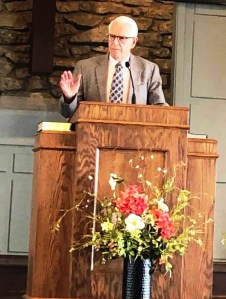
Shelby G. Floyd, minister, delivered this sermon August 4, 2024, at the Heartland Church of Christ, 1693 West Main Street, Greenwood, Indiana 46142.


BACK TO SCHOOL AGAIN

By

Shelby G. Floyd

This is the time of the year when young people begin to think about going back to school. Let us capitalize on this thought and apply it to the Christian life.

From the beginning to the end the Christian life is like a school. In the great commission Jesus commanded his people to go out and “make disciples” out of all the nations (Matthew 28:18-20). “Make disciples” is from (matheteuo), and means “to make a disciple; to teach, instruct” (J. H. Thayer, p. 386). Therefore, we are to be teachers and pupils under the Master-Teacher, Jesus Christ.

THE SECRET OF LEARNING

The secret of learning in this school as in all schools is to teach much, ask much, remember much and do much! The School of Life perhaps is best summarized by the statement of David, Continue reading “BACK TO SCHOOL AGAIN”

ONE GOD

By

Shelby G. Floyd

The Bible teaches that there is just one God, but this one Godhead involves three distinct persons—identified as the Father, the Son, and the Holy Spirit. But there is one God!

ONE LORD GOD
Jesus said, “’Hear, O Israel: The Lord our God, the Lord is one’” (Mark 12:29).

Paul declares that in Christ “dwells all the fullness of the Godhead bodily” (Colossians 2:9). That is why Jesus said to Philip, “He who has seen Me has seen the Father” (John 14:9). Jesus Christ existed eternally as “the Word,” but was historically made flesh and lived among the human family (John 1:1-4; 1:14).

GOD THE FATHER
In several scriptures the first person of the Godhead is even called “God the Father.”

1. Romans 15:6 “that you may with one mind and one mouth glorify the God and Father of our Lord Jesus Christ.”

2. 1 Corinthians 8:6 “yet for us there is one God, the Father, of whom are all things, and we for Him; and one Lord Jesus Christ, through whom are all things, and through whom we live.”

3. 2 Corinthians 1:2-3 “Grace to you and peace from God our Father and the Lord Jesus Christ.”
(Romans 15:6; 1 Corinthians 8:6; 2 Corinthians 1:2-3).

THE MYSTERY OF GOD
The mystery of God is great!

And without controversy great is the mystery of godliness:
God was manifested in the flesh,
Justified in the Spirit,
Seen by angels,
Preached among the Gentiles,
Believed on in the world,
Received up in glory.
(Colossians 2:2; 1 Timothy 3:16).

THE TRINITY
All three persons of the Godhead are mentioned together in such a way as to indicate that they share the same nature—deity (Mt. 28:18-20; 2 Corinthians 13:14; Ephesians 4:4-6). After the baptism of Jesus, the Holy Spirit came upon him in the form of a dove; the Father was in heaven and endorsed his Son as being well pleasing. This is a clear illustration of the three distinct persons who shared the divine nature.

There are several independent lines of proof that Jesus was the divine Son of God:

(1) John the Baptist gave testimony to this fact (John 1:32-34; 5:32-35).

(2) The works of benevolence that Jesus did testify to his deity (John 5:36; Matthew 11:4-6).

(3) The miracles of Jesus prove who he claimed to be (John 20:30-31; 1 John 5:7-8). We serve a powerful God.

Copyright © 2024 Shelby G. Floyd, All Rights Reserved

Shelby G. Floyd, Minister, Heartland Church of Christ, 1693 West Main Street, Greenwood, Indiana 46142

Categories God

MORALITY IN AMERICA

By

Shelby G. Floyd

True morality originated from God, neither man nor government. The purest standard of morality has been derived from Moses and Christ. Morality is the proper relationship between man and his fellow human beings.

The lawful use of the law of morality is to be consistent about what is moral and what is immoral. Just as long ago, so today we have leaders calling what is darkness light and calling what is light darkness.

Paul advises that the law of God concerning morality was not made for those practicing morality, but for the immoral: “ But we know that the law is good if one uses it lawfully, knowing this: that the law is not made for a righteous person, but for the lawless and insubordinate, for the ungodly and for sinners, for the unholy and profane, for murderers of fathers and murderers of mothers, for manslayers, for fornicators, for sodomites, for kidnappers, for liars, for perjurers, and if there is any other thing that is contrary to sound doctrine, according to the glorious gospel of the blessed God which was committed to my trust” (1 Timothy 1:8-11).

As we approach the 248 birthdays of the Republic of America, it is good to reflect on the morality of the United States, the church and all of us as individuals in our various relationships. The founding fathers of our great country all for the most part inculcated the divine morality vouchsafed to us from Old and New Testaments of Moses and Christ.

For example, the House of Burgesses in Virginia set aside June 1, 1773, as a day of Fasting, Humiliation and Prayer imploring Divine blessings. Horace Greeley, from the New York area stated that “Liberty cannot be established without morality, nor morality without faith.” In the Declaration of Independence “the Laws of Nature and of Nature’s God” was invoked as being indispensable to Freedom. “The Laws of Nature” were defined as the will of man’s Creator. Thomas Paine whose book “Common Sense” made the case for Independence wrote, “But where say some, is the king of America? I’ll tell you, my friend, He reigns above.”

After the Revolutionary war ended many of those who signed the original documents went back and created their state constitutions. Delaware required of everyone appointed to public office to say, “I do profess faith in God the Father, and in Jesus Christ His only Son, and in the Holy Ghost, one God, blessed for evermore; and I do acknowledge the Holy Scriptures of the Old and New Testament to be given by divine inspiration.”

Thus was the morality of America founded upon the morality of divine law. Let us all call our country back to its original purpose by each living a life approved by God and man!

Copyright © 2024 Shelby G. Floyd, All Rights Reserved


Shelby G. Floyd, minister, Heartland Church of Christ, 1693 West Main Street, Greenwood, Indiana 46142

Acts 2:1-47 Study Outline

Heartland Church of Christ
Acts of Apostles
July—September 2024
Shelby Floyd
Acts 2:1-47

PPT - How Can I Glorify God? PowerPoint Presentation, free download ...

Student Outline
I. The Baptism of the Holy Spirit (Acts 2:1-4).
1. What was the day of Pentecost? And how did it originate? See Leviticus 23:15.
2. Who does “they” include in Acts 2:1? See Acts 1:26!
3. What does “they were in one accord” mean? See Acts 1:14.
4. Describe what the sound from heaven sounded like. See Acts 1:2. See also Acts 4:31.
5. What were these “divided tongues, as of fire” that came upon the apostles? See Acts 2:3.
6. Who was filled with the Holy Spirit? The crowd or the apostles? See Acts 1:26 and Acts 1:2, 8.

II. Study the Crowds Response to the Tongue Talkers (Acts 2:5-13).
1. Where did all of these devout Jews in Jerusalem originate? See Acts 2:5.
2. Why was the multitude confused when they heard the apostles speaking? See Acts 2:6, 8.
3. Where did the apostles come from geographically? See Acts 2:7.
4. In what language did the multitude of the people hear the apostles speaking on the day of Pentecost? See Acts 2:8.
5. From how many geographical areas did the crowd originate? See Acts 2:9-11.
6. Please list all of these nationalities. There are 16! Name them! See Acts 2:9-11:


7. List all of the words that are used to describe the sound the crowd heard from the apostles.

Acts 2:2__________________________.
Acts 2:3__________________________.
Acts 2:4__________________________.
Acts 2:6__________________________.
Acts 2:8__________________________.
Acts 2:11_________________________.
8. How did some in the audience explain the phenomenon that the crowd had just witnessed on the day of Pentecost? See Acts 2:13.

III. Peter’s Sermon Acts 2:14-40.
1. How many stood up with Peter when he began to speak? And who were these others who stood up with him? See Acts 2: 14
2. Did Peter allow the charge that they were full of new wine to go unanswered? See Acts 2:15.
3. What Old Testament prophet did Peter quote at length to verify what had just happened on the day of Pentecost? Who was the prophet? Acts 2:16. Study the prophets’ statement in Acts 2:16-21.


4. How did Peter go about explaining the life, death and resurrection of Jesus Christ? See Acts 2: 22-24.
5. Peter confirmed his words about Jesus Christ by quoting King David in the Psalms 16:8-11.
 Explain how David could see the Lord Jesus before his face
 What was the reaction of David’s heart, tongue, and his flesh, in regard to the Lord?
 What did David say about the soul and body of Christ after his death?
 What state will David be in before God’s presence?
6. Did God promise David that he would raise up Christ to sit on David’s throne? See Acts 2:29-31.
7. Did Christ receive and pour out the Holy Spirit upon the apostles? See Acts 2:32-36.

IV. The Reaction of the Audience to the Message of Peter! Acts 2: 36-41!
1. Did Peter accuse his audience of crucifying Jesus? See Acts 2:36.
2. What does it mean that God made Jesus both Lord and Christ? Examine Acts 2:36.
3. How did the audience respond to the message of Peter? Answer: “they were cut to the heart.” Acts 2:37. What does that mean?
4. What question did the audience ask Peter? Answer: “men and brethren what shall we do?”
5. To whom did they ask this question? Answer: “Peter and the rest of the apostles.” Verse 37.
6. What was the answer that Peter gave to those who asked the question, “what shall we do?” The answer: Acts 2:38-39
7. Analyze Acts 2:38-39:
 “Repent” – what does this mean? See Luke 24:47.
 “And let everyone of you be baptized.” What does baptize mean?
 What does “in the name of Jesus Christ” mean?
 What is the purpose of baptism according to Peter and Acts 2:38? Answer: “for the remission of sins.”
8. What does “and you shall receive the gift of the Holy Spirit,” mean? Answer: see Acts 2:38.
9. Please explain verse 39 concerning the promise. Acts 2:39 Answer: go to Joel 2:28, 32 and also go to Ephesians 2:13.

V. The Growth of the Church. (Acts 2:40-47).
1. Please take note of Peter’s parting exhortation. Answer: “Be saved from this perverse (crooked) generation.” Verse 40.
2. What happens when the hearers gladly receive the message of the apostles? Answer: “they were baptized.” Acts 2:41.
3. How many were baptized on that first day of the church in Jerusalem? Answer: “about 3000 souls were added to them.” (Acts 2:41).
4. What did the 3000 baptized believers continue to do in their Christian walk? Answer: Acts 2:42.
 They continued steadfastly
 they continued steadfastly in the apostle’s doctrine
 they continued steadfastly breaking of bread
 they continued steadfastly in prayer
5. Did the band of baptized believers have a healthy respect for the apostles? Answer Acts 2:43.
6. What did the band of believers share in common with other believers? Answer Acts 2:44-45
o They sold their possessions and gave to the needy. Acts 2:45
o They divided what they had and shared among those in need. Acts 2:45
7. They had daily fellowship in the spirit of unity! “They continued daily with one accord.” One accord indicates unity!
• See Acts 1:14
• see Acts 2:1
• see Acts 2:46
8. Who adds the saved believers to the church? Answer: see Acts 2:47

Copyright © 2024 Shelby G. Floyd, All Rights Reserved

Shelby G. Floyd, minister, Heartland Church of Christ, 1693 West Main Street, Greenwood, Indiana 46142